
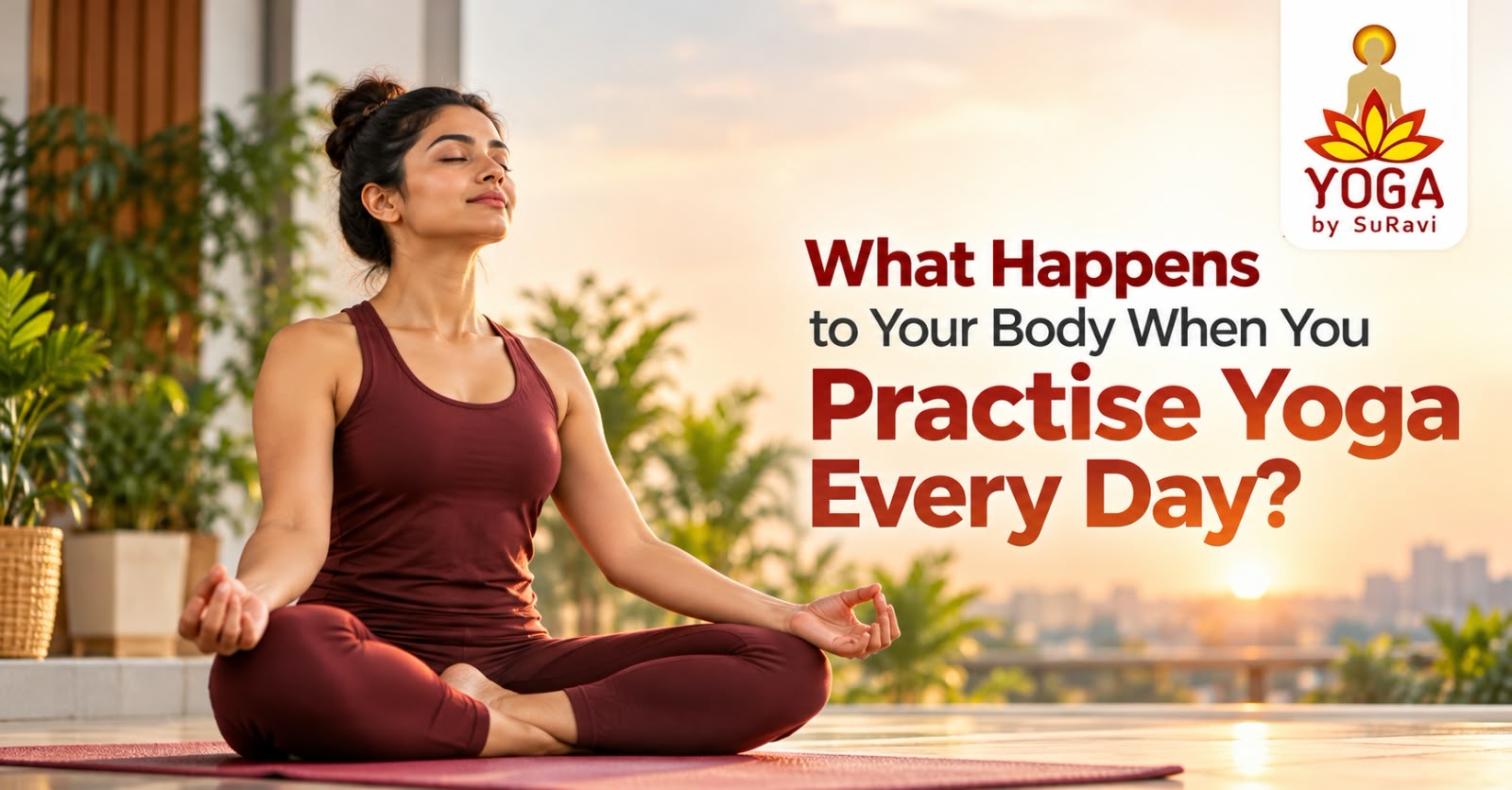
Have you ever wondered what happens to your body when you practise yoga every day? From improving flexibility and posture to supporting mental well-being, yoga can become a powerful part of your daily routine. At Yoga by SuRavi, we believe that yoga is not just an exercise; it is a way to build a healthier, calmer, and more balanced lifestyle.
Whether you prefer Yoga at Home in Mumbai or enjoy the energy of practising with others in a studio, the most important thing is to start and stay consistent. You do not need to be an expert, touch your toes, or spend hours on a yoga mat to experience the benefits. Even a short, regular practice can help you reconnect with your body and mind.
The best part? You can practise yoga wherever you feel comfortable—at home, in a studio, or in any peaceful space where you can focus on yourself.
1. Your Flexibility May Gradually Improve
One of the first changes you may notice when practising yoga regularly is improved flexibility. Spending long hours sitting at a desk, working on a laptop, or travelling can leave your muscles feeling tight, particularly around your hips, shoulders, back, and legs.
Yoga incorporates gentle stretches and controlled movements that help improve your range of motion over time.
Some helpful yoga poses include:
- Downward-Facing Dog: Stretches the back of the legs and shoulders.
- Cat-Cow Pose: Encourages gentle movement through the spine.
- Child’s Pose: Provides a comfortable stretch for the back and hips.
- Butterfly Pose: Helps stretch the inner thighs and hips.
You do not need to perform advanced poses to benefit. Start with movements that feel comfortable and gradually progress as your flexibility improves.
2. Your Muscles May Become Stronger
Did you know that yoga can also help build muscular strength? Many yoga poses require you to support your body weight, engage your core, and maintain balance.
Practising poses such as Plank, Chair Pose, and Warrior Pose can help strengthen the muscles in your arms, legs, abdomen, and back.
Over time, a consistent practice may make everyday activities, such as climbing stairs, maintaining an upright posture, or carrying shopping bags, feel easier.
For beginners, the key is to focus on correct technique rather than trying to hold difficult poses for too long.
3. You May Experience Less Stress and Greater Mental Calmness
Modern life can be demanding. Work responsibilities, traffic, family commitments, and constant screen time can leave you feeling mentally exhausted.
Yoga combines movement, breathing exercises, and focused attention to help you slow down and become more aware of the present moment.
When you practise regularly, you may find it easier to:
- Manage everyday stress.
- Feel calmer after a busy day.
- Improve your awareness of your thoughts and emotions.
- Create a relaxing transition between work and personal time.
Breathing exercises, such as gentle diaphragmatic breathing, can be particularly useful for developing relaxation skills.
Whether you practise alone at home or attend yoga classes in Mumbai, setting aside time for yourself can become an important part of your wellness routine.
4. Your Posture and Body Awareness May Improve
Long hours spent sitting at a desk or looking at a mobile phone can encourage poor posture. Over time, this may contribute to stiffness and discomfort in the neck, shoulders, and back.
Yoga encourages you to pay attention to how you sit, stand, move, and distribute your body weight.
Poses that strengthen the core and back, along with gentle mobility exercises, may help you develop better postural awareness.
With consistent practice, you may become more conscious of slouching and learn to maintain a more comfortable, balanced position throughout the day.
Remember that good posture is not about keeping your body rigid. It is about finding a comfortable position and moving regularly.
5. Your Balance and Coordination May Get Better
Balancing poses may look challenging at first, but they can be a valuable part of your yoga routine.
Tree Pose, Warrior III, and other standing postures challenge your body to coordinate movement while maintaining stability.
Regular practice may help improve balance, coordination, and awareness of your body’s position in space. These skills are useful during everyday activities, exercise, and recreational sports.
If you are a beginner, practise near a wall or sturdy chair for support. You can gradually increase the challenge as your confidence grows.
6. Your Sleep Routine May Become More Relaxing
Finding it difficult to unwind after a long day? Gentle yoga and relaxation exercises may help prepare your body and mind for bedtime.
A calming evening routine can encourage you to step away from work, reduce stimulation, and focus on slower breathing.
You could try:
- Gentle seated stretches.
- Legs-Up-the-Wall Pose, if comfortable and appropriate for you.
- Slow, relaxed breathing.
- A few minutes of guided relaxation.
Some people find that practising yoga regularly helps them sleep better, although the results vary from person to person. Yoga should complement, rather than replace, appropriate care for persistent sleep difficulties.
7. Your Breathing Awareness May Improve
Breathing is something we do automatically, but we rarely pay attention to it.
Yoga introduces breathing techniques, often called pranayama, that encourage you to become more aware of your breathing pattern.
Gentle, controlled breathing may help you relax and manage everyday tension. Coordinating breathing with movement can also make your yoga practice feel more focused and comfortable.
Start with natural, slow breathing rather than forcing deep breaths or holding your breath for extended periods. If a technique causes dizziness or discomfort, stop and return to normal breathing.
8. Yoga Can Support Your Overall Fitness and Healthy Lifestyle
Yoga can be a valuable part of a balanced fitness routine. Depending on the style and intensity, it may help improve muscular endurance, mobility, balance, and general physical activity levels.
However, yoga is not a guaranteed shortcut to weight loss. Your results depend on several factors, including the type of yoga you practise, your overall activity level, nutrition, sleep, and consistency.
For broader fitness benefits, combine yoga with other activities suited to your needs, such as walking, strength training, or cycling.
The goal is not to change your body overnight. It is to build habits that support your health over time.
9. You May Develop a More Consistent Self-Care Routine
Perhaps one of the most valuable benefits of daily yoga is that it encourages you to make time for yourself.
You do not need a perfect schedule or an elaborate setup. A simple 10–20-minute routine can be a practical starting point for many beginners.
You might practise a few stretches in the morning, take a short movement break during the day, or unwind with gentle yoga in the evening.
The key is to choose a routine that fits your lifestyle and feels sustainable.
Yoga at Home or in a Studio: Which Is Better?
The good news is that you do not have to choose one setting forever. Both home practice and studio sessions can be valuable, depending on your preferences, schedule, and learning needs.
Yoga at Home
Practising at home offers flexibility, privacy, and convenience. You can choose a time that fits your routine without commuting.
Ideal for: Busy professionals, beginners who prefer privacy, and people who want to build a consistent daily habit.
Yoga in a Studio
Studio sessions offer a structured environment, instructor guidance, and the opportunity to practise alongside other people.
Ideal for: People who enjoy group sessions, want help learning poses, or feel more motivated with a scheduled class.
If you are searching for the Best Yoga Studio in Marine Lines, look for qualified instructors, suitable class levels, clear guidance on modifications, and a welcoming environment.
Similarly, if travelling across Mumbai feels inconvenient, choosing Yoga at Home in Mumbai may help you fit practice into your everyday life.
The best option is the one that helps you practise safely, comfortably, and consistently.
A Simple Daily Yoga Routine for Beginners
Not sure where to start? Try this gentle routine, adjusting the duration to your comfort level.
| Practice | Suggested duration |
| Gentle breathing and relaxation | 2 minutes |
| Cat-Cow Pose | 2 minutes |
| Child’s Pose | 2 minutes |
| Gentle standing stretches | 3 minutes |
| Modified Plank or another comfortable strengthening pose | 1 minute |
| Relaxation | 2 minutes |
Total: Approximately 12 minutes. Move slowly, avoid painful positions, and seek professional guidance if you have an injury or medical condition that affects exercise.
As you become more comfortable, you can gradually increase your practice time or explore different yoga styles with a qualified instructor.
How Often Should You Practise Yoga to Notice Benefits?
You do not need to practise intensely every day to get started. Consistency and appropriate intensity are more important than pushing yourself beyond your limits.
- First few sessions: Focus on learning basic poses and breathing comfortably.
- After a few weeks: You may begin noticing changes in flexibility, movement confidence, or relaxation.
- With continued practice: Improvements in balance, strength, and body awareness may develop over time.
Everyone progresses differently. Avoid comparing your flexibility or progress with other people, especially on social media.
If you experience sharp pain, dizziness, or unusual discomfort, stop the practice and seek appropriate advice.
Frequently Asked Questions (FAQs)
1. What happens if I practise yoga every day?
Regular yoga may help improve flexibility, strength, balance, posture, relaxation, and body awareness. The benefits depend on your practice, health, and consistency.
2. Is 15 minutes of yoga a day enough for beginners?
Yes. Fifteen minutes can be a useful starting point for learning basic movements, practising breathing, and establishing a routine. You can gradually adjust the duration as your comfort and fitness improve.
3. Is it better to practise yoga at home or in a studio?
Both options have benefits. Home practice offers convenience and flexibility, while studio classes provide instructor guidance and a structured setting. Choose whichever suits your lifestyle and helps you remain consistent.
4. Can daily yoga help with weight management?
Yoga can contribute to an active lifestyle, but weight management also depends on nutrition, overall physical activity, sleep, and other individual factors. More active yoga styles may provide a greater exercise challenge than gentle sessions.
5. Can beginners join yoga classes in Mumbai?
Yes. Beginners can look for classes that offer basic poses, clear instructions, and modifications for different ability levels. Inform your instructor about any injuries or physical limitations before starting.
6. How can I find the right yoga programme in Mumbai?
Consider your preferred location, schedule, fitness level, and whether you feel more comfortable practising at home or in a studio. Look for qualified instructors and a programme that matches your needs.
Do Yoga, Wherever You Feel Comfortable!
Daily yoga is not about achieving perfect poses or following a strict routine. It is about giving yourself time to move, breathe, relax, and develop healthier habits.
Whether you enjoy the privacy of home practice or prefer the guidance and community of a studio, what matters most is taking that first step. Start with a few minutes, listen to your body, and build your practice at a pace that feels right for you.
At Yoga by SuRavi, the message is simple: Do Yoga, Wherever You Feel Comfortable!
Explore yoga classes in Mumbai or choose a convenient home-based routine to begin your wellness journey. If you are looking for the Best Yoga Studio in Marine Lines or flexible Yoga at Home in Mumbai, focus on finding a practice that fits your lifestyle and encourages long-term consistency.
Your yoga journey does not need to begin with a perfect pose. It simply needs to begin.
Be First to Comment